

Ever noticed how you search for a product once… and suddenly every store seems to know exactly what you want?
That’s not luck. That’s AI in action.
AI is transforming e-commerce faster than ever. In fact, McKinsey & Company reports that leading businesses are making AI the core of next-generation e-commerce.
And the numbers back it up. The global AI in retail market is projected to grow from $11.83 billion to $62.64 billion by 2034, growing at an impressive 18.14% annually.
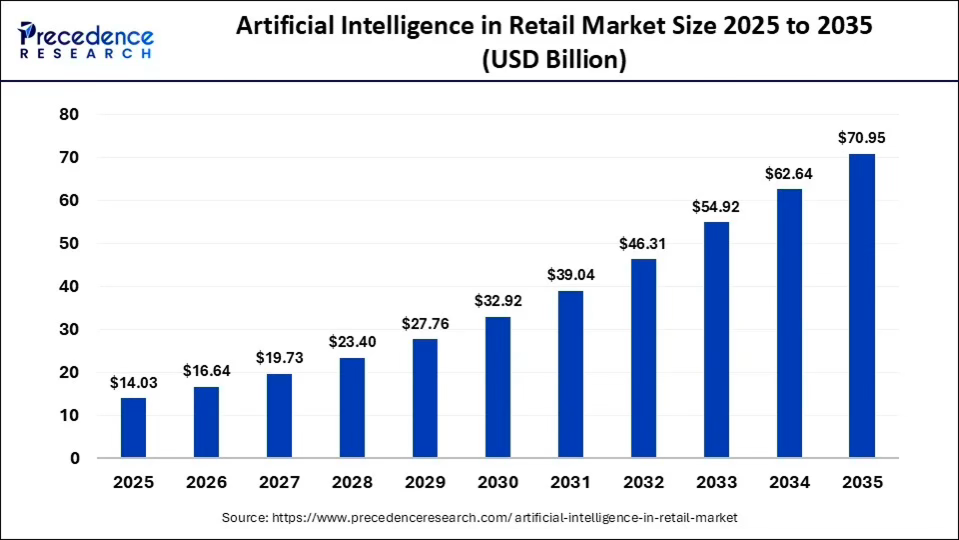
This shift isn’t optional anymore. It is becoming essential. Customers now expect faster, smarter, and highly personalized shopping experiences.
In this blog, we’ll break down what AI in e-commerce really means, why it matters, key use cases, popular tools, and what the future looks like.
AI in e-commerce signifies the integration of advanced AI technologies to make users’ shopping experience exceptional. These technologies include Machine learning (ML), Natural language processing (NLP), Convolutional Neural Networks (CNNs), and many more.
For instance, when a user adds the required product to the card, they get recommendations of the relevant products, or say that other users frequently buy these along with this product. AI is working in the backend here. How? ML analyzes your browsing history, clicks, and any other past interactions to provide you with an entirely personalized experience.
This is just one example, so don’t think e-commerce AI is just for improving customer experience. Using AI in e-commerce can help to streamline your business, provide you with real-time insights to make informed decisions, and eliminate manual and repetitive tasks.
How?
Gen AI can help write engaging product descriptions and marketing content in no time. With predictive analytics, you can predict future trends and how customer needs are evolving, helping you maintain inventory and build dynamic strategies.
Therefore, from creating content to analyzing data for forecasting, AI is transforming the e-commerce landscape.
E-commerce is not just about listing products and waiting for customers to buy. The game has completely changed. Today, it is about understanding what your customer wants before they even say it, and delivering it in the smoothest way possible. That is exactly where AI steps in.
Earlier, e-commerce worked reactively. A customer searched, clicked, and bought. Brands simply responded to actions.
Now, AI has shifted this entire flow.
It helps businesses predict what a customer might need based on past behavior, browsing patterns, and preferences. And it does not stop there. It goes one step further and personalizes the entire experience.
Think about it.
From the products you see on the homepage to the emails you receive, everything feels tailored. That is not random. That is AI learning and adapting in real time.
Instead of waiting for customers to act, brands can now guide their journey.
Let’s be real. Customers today are impatient.
They want:
If a website feels slow or generic, they leave. It is that simple.
AI helps businesses keep up with these expectations by:
Customers do not just prefer this anymore. They expect it.
Every click, search, add-to-cart, and purchase creates data. And e-commerce businesses are sitting on a massive amount of it.
But here’s the challenge.
Data is only useful if you know how to use it.
Manually analyzing this volume of data is almost impossible. This is where AI becomes essential.
AI can:
This means businesses can make smarter and faster decisions. Whether it is stocking the right products, setting the right price, or targeting the right audience, AI removes the guesswork.
And this is not just theory. Businesses are already seeing real results with AI.
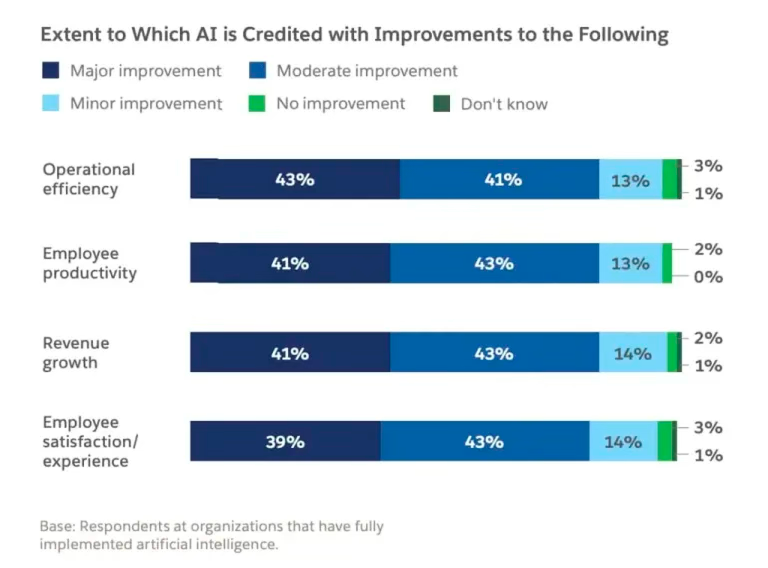
As we mentioned, AI works silently in the backend from the moment the customer lands on our website, looks for products, and final checkout. AI is involved in almost every interaction. Let’s break it down.
Have you ever wondered how platforms like Amazon know exactly what you want?
That is AI analyzing your browsing history, past purchases, and similar customer behavior.
Based on this, it shows:
This kind of personalization makes shopping easier and faster for users. On top of that, users feel brands value them.
When customers see relevant products, they are more likely to buy. It increases average order value and reduces decision fatigue.
Search has gone way beyond typing keywords.
AI now allows users to:
For example, a customer can upload a picture of a dress and instantly find similar options online. No guessing keywords. No endless scrolling.
Voice search is growing exponentially, especially with smart devices making hands-free shopping easier. So, users don’t need to type, say what they exactly need.
It leads to faster discovery, better user experience, and higher engagement.
Customers do not want to wait; they want answers instantly.
AI-powered chatbots help businesses:
These bots are no longer robotic and rule-based. They understand queries’ intent, context, and respond naturally, making conversations feel human.
This is called conversational commerce, where users can browse and buy through chat itself.
Pricing is no longer fixed. It is smart. AI helps businesses adjust prices in real time based on:
It ensures that businesses stay competitive while maximizing profits.
For customers, it often means better deals at the right time. For businesses, it means optimized revenue.
Stock management can make or break an eCommerce business. Too much stock leads to losses. Too little leads to missed sales.
AI solves this by:
This results in reduced overstock, fewer stockouts, better planning, and cash flow.
With the rise of online transactions, fraud risks have also increased. AI helps detect:
It works in real time, flagging issues before damage happens.
It reduces chargebacks and protects both businesses and customers.
Marketing becomes far more powerful with AI. Instead of sending the same message to everyone, AI enables:
For example, a user who abandoned their cart might receive a reminder with a personalized offer.
This results in higher engagement, better ROI, and stronger customer relationships.
According to a study, 64% of commerce leaders believe AI will improve consumer experiences and help them gain a competitive advantage. Still, many e-commerce brands are not sure about investing in AI.
Here are the following benefits of AI in e-commerce:
Customers expect personalization as technology advances. They want endless choice and a hyperpersonalized experience while they are on your platform. At every step of their shipping experience, they want to feel truly valued.
And guess what? AI makes a difference here. AI can analyze a vast amount of customer data, helping you to personalize product recommendations, tailored returns & support experience.
When a customer adds items they want to their card, they’re more inclined to buy them. This increases your conversion rate plus average order value (AOV).
Customer experience is everything, and if you’re not putting it first, you’re going to be left behind. According to the PwC study, 32% of people stop using a brand after one bad experience. But AI is changing that.
Now, you can offer more contextual and personalized customer service while boosting their satisfaction. Here’s how:
Automation eliminates various repetitive tasks across email marketing and the sales cycle, providing the team enough time to focus on strategic tasks.
For instance, earlier with Air India, there were multiple handoffs between Air India’s contact center, refunds team, and the customer to handle refund requests. It just delays the resolution, but frustrates the customer the most. So the next time, they want to fly, they might avoid Air India.
But after leveraging agentic AI ( Agentforce), they streamlined their refund process and automated routine steps, reducing human effort and enabling agents to focus on higher-value interactions.
Now, customers benefit from faster resolutions, timely refund processing, and proactive updates.
AI doesn’t just take work off your plate; it makes work better. With AI agents supporting daily operations, teams can focus on creative thinking, problem-solving, and high-value decisions instead of routine execution.
Access to real-time insights also gives employees more confidence in their decisions, reducing guesswork and friction. This shift creates a sense of ownership and impact in their roles.
The result is that teams feel more engaged, less overwhelmed, and better equipped to contribute meaningfully, while continuously building skills that matter for the future.
AI in eCommerce sounds exciting, and it is, but like any technology, it comes with its own set of challenges. The good news is that most of them are manageable with the right approach.
When you’re working with customer data, trust matters. The key is to use secure systems, stay compliant, and be transparent about how you use data.
Building trust here directly impacts customer loyalty and long-term retention.
AI can feel expensive at the start. Instead of going all in, begin with one or two high-impact use cases and scale as you start seeing results.
This way, you invest with clarity instead of taking unnecessary risks.
If your data is messy or incomplete, your results will be too. Keeping your data clean and organized goes a long way.
Better data leads to more accurate insights and stronger outcomes.
Fitting AI into your existing systems isn’t always plug-and-play. Choosing tools that integrate easily or working with the right partner can simplify things.
A smooth setup ensures faster adoption and fewer disruptions.
Not every team is AI-ready from day one. But that’s okay. You can upskill your team or bring in experts to get things moving.
Over time, this builds a more confident and capable workforce.
There’s no shortage of AI tools in eCommerce today, but the right ones can make a real difference in how you sell, engage, and grow. Here are some of the most widely used platforms:
Shopify offers built-in AI features and app integrations that help with product recommendations, automated marketing, and smart inventory management. It’s especially useful for small to mid-sized businesses looking to scale quickly without heavy tech setup.
Amazon uses AI across its platform, from personalized recommendations to dynamic pricing and demand forecasting. Sellers can benefit from its advanced logistics, advertising tools, and data-driven insights to optimize performance.
Google Cloud AI provides powerful tools for data analysis, personalization, and machine learning models. It helps businesses build custom AI solutions like recommendation engines, chatbots, and predictive analytics.
Salesforce Einstein AI enhances customer relationship management by offering predictive insights, automated workflows, and personalized customer journeys. It’s ideal for businesses focused on improving customer engagement and retention.
Adobe Commerce uses AI to deliver personalized shopping experiences, product recommendations, and customer segmentation. It’s well-suited for enterprises looking for flexibility and deep customization.
AI in eCommerce is evolving fast, and what feels advanced today will soon become the standard. Here are the key trends shaping the future:
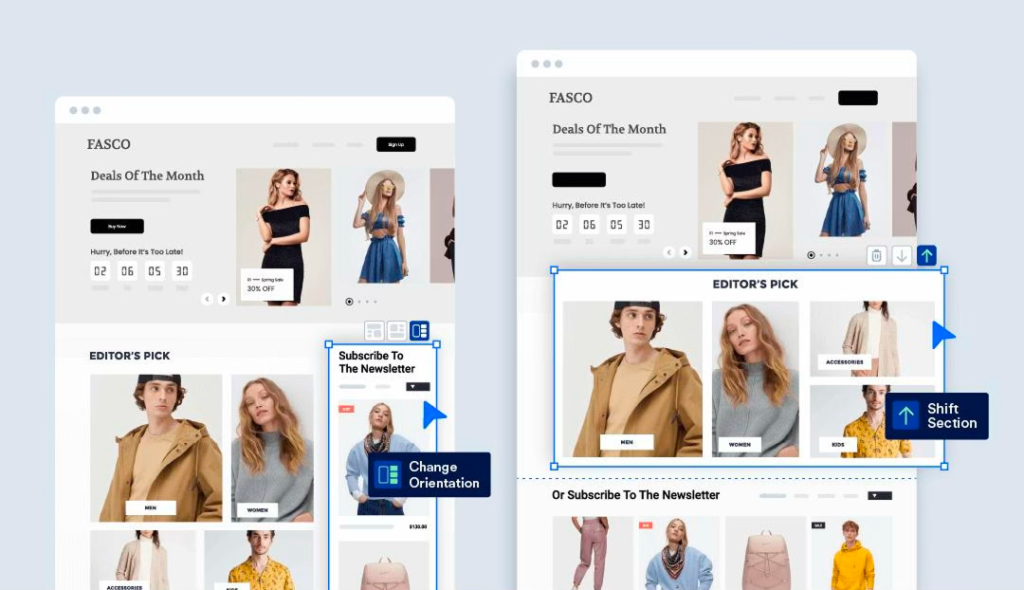
Personalization is shifting from segments to individuals. AI will analyze real-time behavior, preferences, and intent to create fully customized experiences for each shopper. This includes dynamic homepages, tailored pricing, personalized emails, and product bundles designed specifically for one user. The result is higher engagement, stronger loyalty, and better conversion rates.
Voice-enabled shopping is becoming more natural as consumers get comfortable with assistants. Instead of browsing, users can simply speak their needs, and AI will handle search, comparison, and checkout. This trend will especially grow in mobile and smart home ecosystems, making shopping faster and more accessible.
Creating product content at scale is a major challenge for eCommerce brands. AI is changing that by generating descriptions, titles, images, and even videos automatically. It can also optimize content for SEO and different audiences. This not only saves time but ensures consistency and faster go-to-market for new products
AR combined with AI will make online shopping more immersive. Customers can visualize products in real-world settings or try them virtually before purchasing. AI enhances this by recommending the right size, style, or fit based on user data. This reduces returns and increases buyer confidence.
AI agents are evolving into independent shopping assistants. Instead of just suggesting products, they can understand user preferences, compare options across platforms, track prices, and even complete purchases. This shifts eCommerce from manual browsing to assisted or fully automated buying journeys.
The future isn’t just about selling products, it’s about creating intelligent, seamless experiences. Brands that adopt these trends early will stand out, build stronger relationships, and stay ahead in an increasingly competitive market.
How to Implement AI in Your eCommerce Business
Getting started with AI doesn’t have to be overwhelming. The key is to take a structured, step-by-step approach instead of trying to do everything at once.
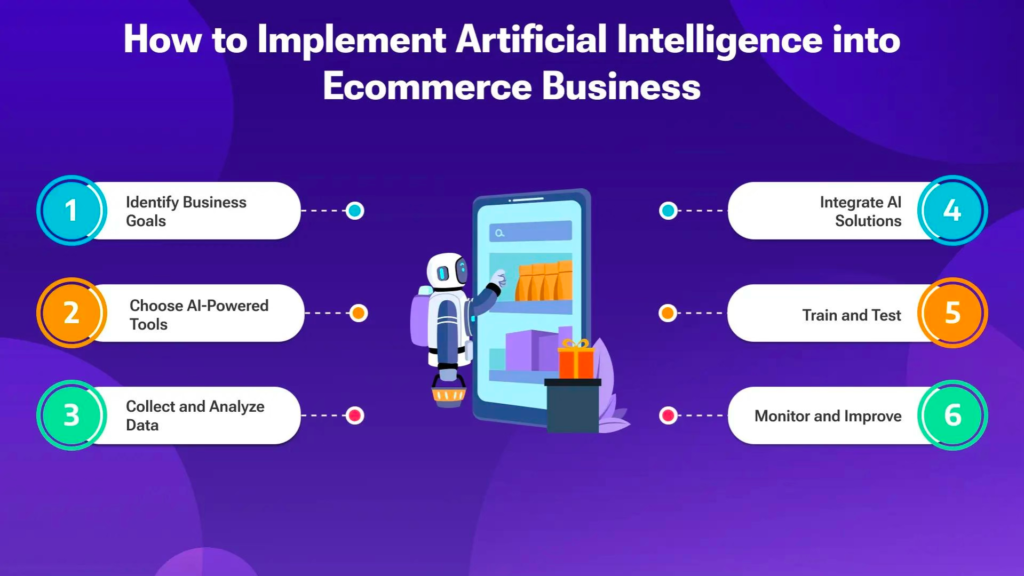
Start by identifying where AI can create the most impact. This could be product recommendations, customer support, or marketing automation. Focus on one clear problem instead of multiple areas to ensure faster results and easier execution.
Select tools that align with your business size, goals, and existing tech stack. Whether it’s built-in AI features or custom solutions, the right platform should be easy to integrate and scalable as your business grows.
AI relies heavily on data, so it’s important to ensure your data is accurate, organized, and up to date. Clean data improves the quality of insights, personalization, and overall performance of your AI systems.
Once your tools and data are ready, integrate AI into your current systems like CRM, inventory, and marketing platforms. A smooth integration ensures everything works together seamlessly without disrupting operations.
AI isn’t a one-time setup. Once implemented, it’s important to track performance, analyze results, and make continuous improvements. Monitor key metrics like conversion rates, engagement, and customer behavior to understand what’s working.
Over time, refine your models, update strategies, and optimize experiences to get the best results. The more you learn and adjust, the more value AI delivers
AI is quickly becoming a core part of how eCommerce businesses grow and compete. From personalized shopping experiences to smarter operations, it’s helping brands work better and connect more meaningfully with customers.
What once felt optional is now becoming essential.
As expectations rise, waiting too long can mean falling behind. The businesses seeing real results are the ones taking action now.
Now is the time to integrate AI, not experiment later.
In simple terms, it’s using smart technology to make your online store work better, whether that’s recommending the right products, automating support, or helping you understand your customers.
It makes the experience feel more personal. Customers see products they actually like, get quick answers, and don’t have to spend time searching endlessly.
Not really. Many tools today come with built-in AI features, so you can start small and expand as your business grows.
Things like managing customer data, setting it up properly, or figuring out where to start can feel tricky in the beginning, but they’re manageable with the right approach.
Pick one area where you need improvement, like customer support or recommendations, try it out, and build from there once you start seeing results.
Let’s make it Happen!
Book a free intro call. Tell us about your idea and when you want to launch—we’ll map out how to make it real.
A few quick details and we’ll reach out.
We build and deploy smart AI solutions—from strategy to support—helping you automate, scale, and grow effortlessly.
Let’s make it Happen!